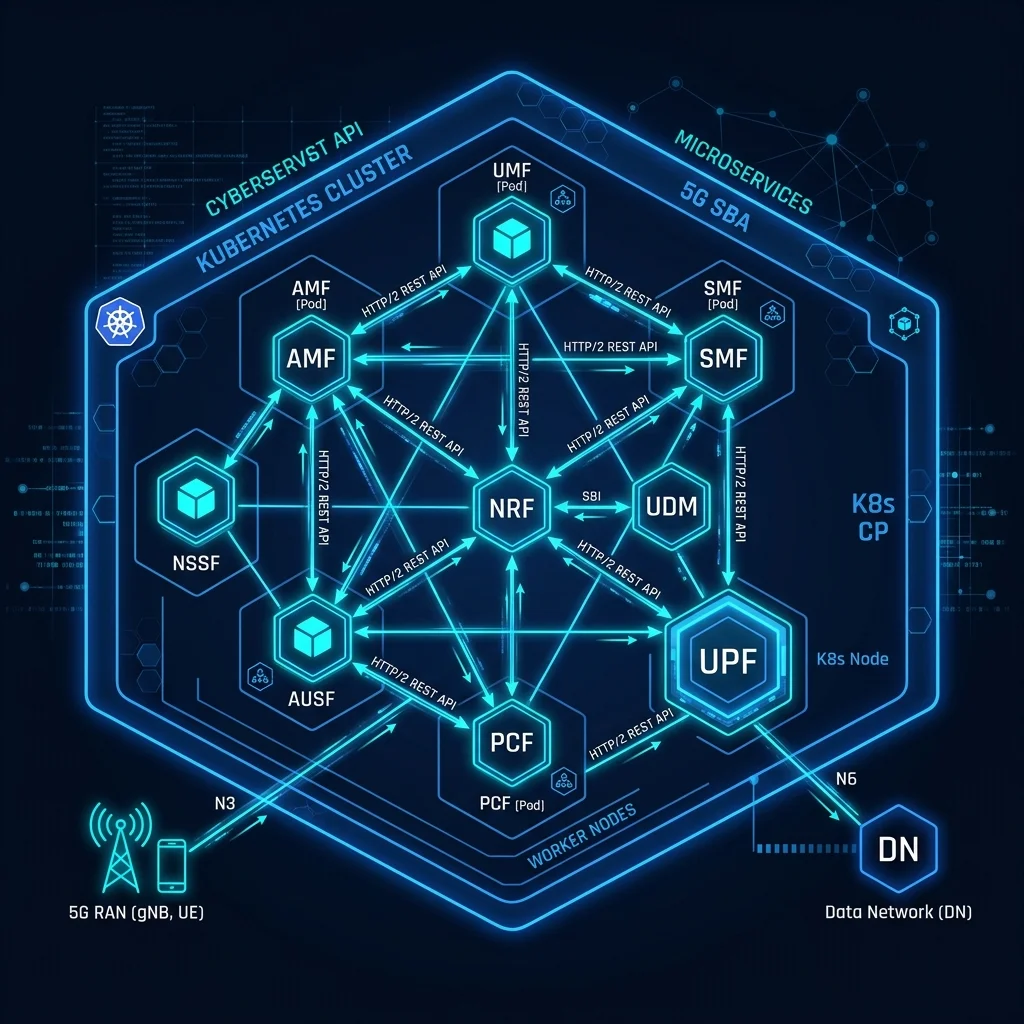
The Diameter protocol was introduced as the successor to RADIUS and the signaling backbone for 4G/LTE networks. While it includes transport-layer security via IPsec and TLS — a significant improvement over the completely unprotected SS7 protocol — fundamental architectural weaknesses in its deployment, particularly across roaming interconnects, expose operators to a range of attacks that mirror and sometimes exceed the severity of legacy signaling vulnerabilities.
Diameter's security paradox is this: the protocol specification (RFC 6733) includes robust security mechanisms, but the economic and operational realities of global roaming have led to deployments where those mechanisms are systematically bypassed. The result is a signaling fabric that connects over 800 mobile operators worldwide with weaker effective security than its design intended. This research provides a comprehensive analysis of how these gaps are exploited and what operators can do to close them — knowledge that is directly applicable to understanding the 5G SBA vulnerabilities and the security challenges of 5G network slicing.
WHITEPAPER: 4G/LTE Diameter Security Hardening
Download the complete technical guide for configuring Diameter Edge Agents (DEA) to prevent AVP injection and realm spoofing (PDF).
This research examines the security posture of the Diameter protocol as deployed in modern LTE and LTE-Advanced networks. We analyze the protocol's trust model, dissect specific attack vectors targeting Diameter Edge Agents (DEAs) and Diameter Routing Agents (DRAs), present real-world interconnect breach case studies, and evaluate the effectiveness of current mitigation strategies including Diameter firewalls, GSMA FS.19 compliance, and the transition to 5G SBA vulnerabilities.
- Diameter roaming exchanges lack end-to-end integrity verification.
- AVP manipulation enables subscriber tracking, fraud, and DoS.
- Diameter firewalls with AVP-level inspection are the primary defense.
- 5G interworking preserves Diameter attack surfaces for years to come.
- Testing interconnect security requires specialized lab environments.
I. Diameter Protocol Architecture
Diameter is a peer-to-peer AAA (Authentication, Authorization, and Accounting) protocol defined in RFC 6733. In LTE networks, it serves as the signaling protocol between network functions including the Mobility Management Entity (MME), Home Subscriber Server (HSS), Policy and Charging Rules Function (PCRF), and Online Charging System (OCS). Understanding Diameter's architecture is essential because it remains the dominant signaling protocol for the 800+ operators worldwide running 4G/LTE — and its attack surface persists through 5G Non-Standalone (NSA) interworking.
Unlike SS7's connection-oriented SCTP/MTP3 stack, Diameter operates over TCP and SCTP with optional TLS/DTLS encryption. The protocol uses Attribute-Value Pairs (AVPs) to encode all signaling data, with each AVP carrying a specific type of information — subscriber identity, location data, charging records, or policy rules. This AVP-based extensibility, while powerful, creates a vast attack surface because each AVP type can be independently manipulated if filtering is incomplete.
Trust Boundary Gap
While Diameter supports TLS between peers, roaming interconnect networks (IPX/GRX) typically terminate TLS at the Diameter Edge Agent. Messages traverse the interconnect fabric without end-to-end cryptographic protection, enabling intermediary manipulation. This is the single most critical architectural weakness — and the one most commonly exploited.
Key Diameter Interfaces in LTE
S6a/S6d
MME ↔ HSS. Authentication vector retrieval, subscriber data download, location update registration. Primary attack target for location tracking and subscriber manipulation.
S9
vPCRF ↔ hPCRF. Policy and charging control for roaming subscribers. Vulnerable to policy injection that can alter QoS or disable charging.
SWx
3GPP AAA Server ↔ HSS. Non-3GPP access authentication (Wi-Fi offloading). Often overlooked in security audits despite providing an alternative attack path to the HSS.
Gx/Gy/Ro
PCEF ↔ PCRF / OCS. Bearer-level QoS enforcement, online/offline charging. Manipulation enables charging fraud and service theft.
Diameter vs. SS7: Security Comparison
| Feature | SS7 (MAP/CAP) | Diameter | Impact |
|---|---|---|---|
| Transport Security | None (cleartext MTP3) | TLS/IPsec (optional) | Diameter better in theory |
| End-to-End Integrity | None | None (TLS hop-by-hop) | Both equally vulnerable |
| Message Authentication | None | Origin-Host/Realm AVP (spoofable) | Marginal improvement |
| Interconnect Trust Model | Implicit trust | Implicit trust (IPX/GRX) | Same fundamental flaw |
| Attack Complexity | Low (GT scanning) | Moderate (realm/AVP crafting) | Diameter slightly harder |
| Detection Difficulty | Low (known patterns) | Higher (legitimate-looking AVPs) | Diameter attacks harder to detect |
| 5G Exposure | None (deprecated) | Via N26/IWF interworking | Diameter persists into 5G era |
II. Attack Vectors on Diameter Interconnects
The primary attack surface in Diameter networks exists at the roaming interconnect boundary. An attacker who gains access to the IPX/GRX fabric — either through a compromised operator, a rogue MVNO, a misconfigured DEA, or social engineering of IPX provider credentials — can inject, modify, or replay Diameter messages targeting any connected operator's core network. The attack vectors directly parallel those documented in our SS7 research, but with protocol-specific nuances that require different detection strategies.
1. Subscriber Location Tracking
Similar to SS7's SendRoutingInfo, Diameter's Authentication-Information-Request (AIR) and Update-Location-Request (ULR) messages on the S6a interface can be exploited. A crafted ULR sent to a target HSS will return the subscriber's serving MME identity, which maps directly to a geographic area. Combined with Insert-Subscriber-Data-Request (IDR), an attacker can build a real-time movement profile.
The precision of Diameter-based tracking depends on MME deployment density — in urban environments, a serving MME typically covers 2–10 km², enabling meaningful location surveillance. This technique has been documented by researchers at multiple security conferences and is a key concern in the GSMA's interconnect security guidelines.
Update-Location-Request (ULR) ::= < Diameter Header: 316, REQ, PXY >
    < Session-Id >
    { Auth-Session-State }
    { Origin-Host }         ;; Attacker's DEA
    { Origin-Realm }        ;; Attacker's realm
    { Destination-Realm }   ;; Target operator
    { User-Name }           ;; Target IMSI
    { RAT-Type }            ;; E-UTRAN
    { ULR-Flags }
    { Visited-PLMN-Id }
-- Response reveals: serving MME, subscription data
-- MME identity → geographic cell coverage area
2. Subscriber Profile Manipulation
Beyond passive tracking, an attacker can actively modify subscriber profiles using Insert-Subscriber-Data-Request (IDR) messages. By injecting modified subscription data, an attacker can:
- Disable services: Remove APN configurations, preventing data connectivity
- Redirect calls: Modify call forwarding supplementary service settings
- Alter QoS: Downgrade subscriber priority class, causing degraded service
- Enable wiretapping: Configure the Lawful Intercept IRI/CC addresses to attacker-controlled systems (in networks where LI is HSS-driven)
This is significantly more dangerous than the equivalent SS7 attacks because Diameter's richer data model allows more granular subscriber manipulation through a single protocol exchange.
3. Charging Fraud via AVP Manipulation
By intercepting and modifying Credit-Control-Request (CCR) messages on the Gy/Ro interfaces, an attacker can manipulate charging records. This includes inflating granted service units for prepaid subscribers, redirecting charging to different accounts, or suppressing charging entirely to provide free service to compromised devices. The financial impact of Diameter-based charging fraud can reach millions of dollars before detection, particularly in prepaid-dominant markets.
4. Denial of Service
A flood of Cancel-Location-Request (CLR) messages targeting a specific IMSI forces the HSS to deregister the subscriber from their current MME, causing immediate service disconnection. Unlike volume-based DDoS attacks, this is a surgical, low-bandwidth method that can target individual subscribers or entire subscriber groups.
5. Authentication Vector Theft
The Authentication-Information-Request (AIR) on the S6a interface retrieves authentication vectors from the HSS. If an attacker can intercept the Authentication-Information-Answer (AIA) containing RAND, AUTN, XRES, and KASME values, they can potentially clone subscriber sessions or perform targeted IMSI catcher attacks with pre-computed authentication responses.
Roaming Interconnect Risk
The IPX/GRX fabric connecting hundreds of operators worldwide operates as a shared trust domain. A single compromised operator or misconfigured DEA can serve as a launch point for attacks against any connected network. The 2021 GSMA T-ISAC reports documented over 40 confirmed incidents of unauthorized Diameter signaling activity across member operators — and these are only the detected cases.
Attack Vector Summary
| Attack | Diameter Command | Interface | Impact | Detection Difficulty |
|---|---|---|---|---|
| Location Tracking | ULR/ULA, IDR/IDA | S6a | Subscriber surveillance | Medium |
| Profile Manipulation | IDR | S6a | Service disruption, call redirect | High |
| Charging Fraud | CCR/CCA modification | Gy/Ro | Financial loss | Very High |
| Service Denial | CLR | S6a | Subscriber disconnection | Low |
| Auth Vector Theft | AIR/AIA interception | S6a | Session cloning, IMSI catcher enhancement | High |
| Policy Injection | RAR with Charging-Rule-Install | Gx | QoS manipulation, zero-rating abuse | High |
III. DEA/DRA Bypass Techniques
Diameter Edge Agents (DEAs) are deployed at network perimeters to filter and route inter-operator signaling. They are the primary — and often only — security control between an operator's core network and the global IPX/GRX interconnect. However, common misconfigurations and design limitations create exploitable bypasses. Understanding these techniques is essential for both offensive telecom pentesting methodology and defensive hardening.
01 Realm Spoofing
Attackers forge the Origin-Realm AVP to impersonate a trusted operator. Many DEAs only validate the realm against a static whitelist without verifying the actual peer connection identity (CER/CEA exchange), enabling unauthorized message injection from any IPX-connected peer.
02 AVP Injection
Malicious AVPs are added to legitimate message flows. If the DEA doesn't perform deep AVP validation beyond mandatory fields, injected AVPs — such as Subscription-Data or Charging-Rule-Install — pass through to the core network and are processed as legitimate instructions.
03 Application-ID Abuse
By crafting messages with unexpected Application-IDs, attackers can route commands to internal Diameter applications that were not intended to be exposed to roaming partners, bypassing per-application access control. This often targets the SWx interface for Wi-Fi offload authentication.
04 Replay Attacks
Diameter's Session-Id provides some replay protection, but stateless DEA configurations that don't track session state allow replayed authentication or location queries to succeed. This is particularly effective against operators using basic DEA configurations without session-aware firewalling.
IV. Real-World Diameter Attack Case Studies
A. IPX Provider Compromise Scenario
In a documented scenario analyzed by ENISA, a compromised IPX hub operator was used to inject crafted Diameter messages targeting multiple connected mobile networks simultaneously. Because IPX providers serve as trusted intermediaries for hundreds of operators, compromising a single IPX node grants access to the entire interconnected signaling fabric. The attack involved ULR-based location tracking of high-value targets across multiple countries before detection.
B. MVNO Credential Abuse
A rogue Mobile Virtual Network Operator (MVNO) with legitimate Diameter interconnect access exploited their position to query subscriber data from their host MNO's HSS. Because the MVNO had valid CER/CEA peer credentials, their messages passed DEA realm validation. Only behavioral anomaly detection — identifying queries for subscribers outside the MVNO's assigned IMSI range — eventually flagged the abuse.
C. Wi-Fi Offload Attack Path
Researchers demonstrated that the SWx interface (used for Wi-Fi offloading authentication) is often left unfiltered at DEAs because it's considered a "trusted" internal interface. By routing attack traffic through legitimate Wi-Fi offload authentication flows, attackers bypassed Diameter firewalls configured to inspect only S6a and S9 traffic.
V. Diameter Security Testing Methodology
Assessing Diameter interconnect security requires a structured approach that mirrors the telecom pentesting methodology framework:
- Reconnaissance: Map the target operator's Diameter topology by analyzing public GSMA IR.21 data, DNS SRV records for Diameter peers, and IPX provider documentation.
- Peer Enumeration: Identify all connected DEAs and DRAs through crafted Capabilities-Exchange-Request (CER) messages to discover supported Application-IDs and peer realms.
- AVP Validation Testing: Send messages with unexpected, malformed, or injected AVPs to determine the depth of the DEA's filtering capabilities.
- Realm Spoofing Tests: Verify that Origin-Realm and Origin-Host AVPs are validated against the actual peer connection identity, not just a static whitelist.
- Application-ID Boundary Testing: Attempt to reach internal Diameter applications not intended for roaming exposure.
- Behavioral Baseline: Establish normal signaling patterns and test the operator's anomaly detection capabilities against low-and-slow attack patterns.
For hands-on testing environments, our private LTE/5G lab covers setting up Diameter test infrastructure using open-source tools. TelcoSec's signaling security tools provide automated testing frameworks for these assessments.
VI. Mitigation Strategies
Defending Diameter interconnects requires a layered approach combining protocol-level controls with architectural improvements. No single control is sufficient — defense in depth is mandatory.
01 Diameter Firewalls
Deploy stateful Diameter firewalls with deep AVP inspection at every interconnect point. These must validate Origin-Host/Realm against the actual peer connection, enforce Application-ID whitelists, and block unexpected command codes per roaming agreement. Stateful tracking ensures replay attacks are detected and rejected.
02 End-to-End TLS
Implement TLS between originating and terminating Diameter agents, not just between adjacent peers. This prevents intermediary IPX nodes from inspecting or modifying AVP payloads during transit. While operationally complex, this is the only reliable defense against man-in-the-middle attacks at the IPX layer.
03 GSMA FS.19 Compliance
The GSMA's FS.19 specification provides a comprehensive security baseline for Diameter interconnects, including mandatory filtering rules, anomaly detection requirements, and inter-operator signaling policies. Operators should validate compliance through regular telecom pentesting methodology.
04 Behavioral Anomaly Detection
Supplement static filtering with machine-learning-based anomaly detection that profiles normal signaling patterns per peer and flags statistical deviations — unusual query volumes, out-of-range IMSI targets, or geographically inconsistent location queries.
Defense Effectiveness Matrix
| Defense Layer | Location Tracking | Profile Manipulation | Charging Fraud | DoS | Auth Vector Theft |
|---|---|---|---|---|---|
| Basic DEA (realm whitelist) | Partial | Minimal | Minimal | Partial | Minimal |
| Advanced DEA (AVP inspection) | Good | Good | Moderate | Good | Moderate |
| Stateful Diameter Firewall | Excellent | Excellent | Good | Excellent | Good |
| End-to-End TLS | Excellent | Excellent | Excellent | N/A | Excellent |
| Behavioral Anomaly Detection | Good | Good | Excellent | Good | Excellent |
| 5G SBA Migration (full) | Excellent | Excellent | Excellent | Good | Excellent |
The 5G Transition: Not a Complete Solution
The 5G Service Based Architecture replaces Diameter with HTTP/2 and OAuth 2.0-based NRF authorization — a significant security improvement. However, 4G/5G interworking functions (N26 interface, IWF nodes) ensure Diameter exposure persists during the multi-year transition period. The interworking layer itself introduces new attack surfaces where protocol translation can be exploited. See our 5G network security architecture and network slicing security research for the complete picture.
VII. Authoritative References
VIII. Frequently Asked Questions
Is Diameter more secure than SS7? ▼
Diameter offers transport-layer security (TLS/IPsec) that SS7 vulnerabilities lacks entirely. However, the practical security improvement is limited because TLS is typically terminated at DEAs, not end-to-end. The same classes of attacks — location tracking, subscriber manipulation, fraud — are achievable through Diameter when interconnect access is obtained. The comparison table above summarizes the detailed differences.
Can a Diameter firewall stop all attacks? ▼
No. Diameter firewalls significantly reduce attack surface, but they cannot prevent attacks from legitimately connected peers that send valid-looking messages within their permitted scope. Behavioral anomaly detection and subscriber-context validation are needed to catch sophisticated abuse patterns that use legitimate commands with malicious intent.
Will 5G eliminate Diameter vulnerabilities? ▼
5G Standalone networks replace Diameter with HTTP/2-based SBA signaling, which includes OAuth 2.0 authorization and per-NF access tokens. However, interworking with 4G networks requires N26 and SWx interfaces that expose legacy Diameter attack surfaces. Full migration will take many years — most operators will run hybrid 4G/5G networks well into the 2030s.
How do I test my Diameter interconnect security? ▼
The most effective approach is a structured telecom penetration test that includes realm spoofing, AVP injection, Application-ID boundary testing, and behavioral anomaly validation. TelcoSec provides these assessments through our dedicated labs. For self-testing, build a private LTE/5G lab with open-source Diameter stacks (freeDiameter, OpenDiameter).
What is the relationship between Diameter and GTP? ▼
Diameter handles signaling (authentication, location updates, policy), while GTP (GPRS Tunneling Protocol) carries user data traffic. Both traverse the IPX/GRX interconnect and both are vulnerable to manipulation. A comprehensive roaming security assessment must address both protocols — Diameter for signaling abuse and GTP for data interception.
Can IMSI catchers exploit Diameter vulnerabilities? ▼
Yes — Diameter attacks and IMSI catchers operations are complementary. Diameter-based authentication vector theft (AIR/AIA interception) can provide pre-computed authentication responses that make active IMSI catcher attacks more effective. Additionally, Diameter-based location tracking can narrow the geographic area where an IMSI catcher needs to be deployed.
Conclusion & Next Steps
The Diameter protocol represents a critical attack surface in 4G/LTE networks that is often overlooked in favor of legacy SS7 security. With over 800 operators interconnected through IPX/GRX fabrics, a single misconfigured DEA can expose entire subscriber bases to tracking, fraud, and service disruption. The transition to 5G SBA vulnerabilities will eventually address many of these architectural weaknesses, but the multi-year interworking period ensures Diameter remains a high-priority target well into the 2030s.
The defense roadmap requires:
- Immediate: Deploy stateful Diameter firewalls with deep AVP inspection (GSMA FS.19 baseline)
- Short-term: Implement end-to-end TLS and behavioral anomaly detection
- Medium-term: Validate through regular telecom pentesting methodology engagements
- Long-term: Accelerate 5G SA migration with SEPP-based roaming security
TelcoSec provides comprehensive Diameter interconnect security assessments, including simulated attack campaigns to validate firewall configurations and identify AVP filtering gaps. Explore our TelcoSec research library for related signaling intelligence, or review the 3GPP specification navigator for detailed protocol references.
SECURE DIAMETER INFRASTRUCTURE?
Learn to audit and protect Diameter-based 4G/LTE roaming interfaces through our advanced signaling security tracks. Master AVP manipulation and DEA bypass techniques.